1. Two Fatal UX Breakdowns in Legacy Voice Bots
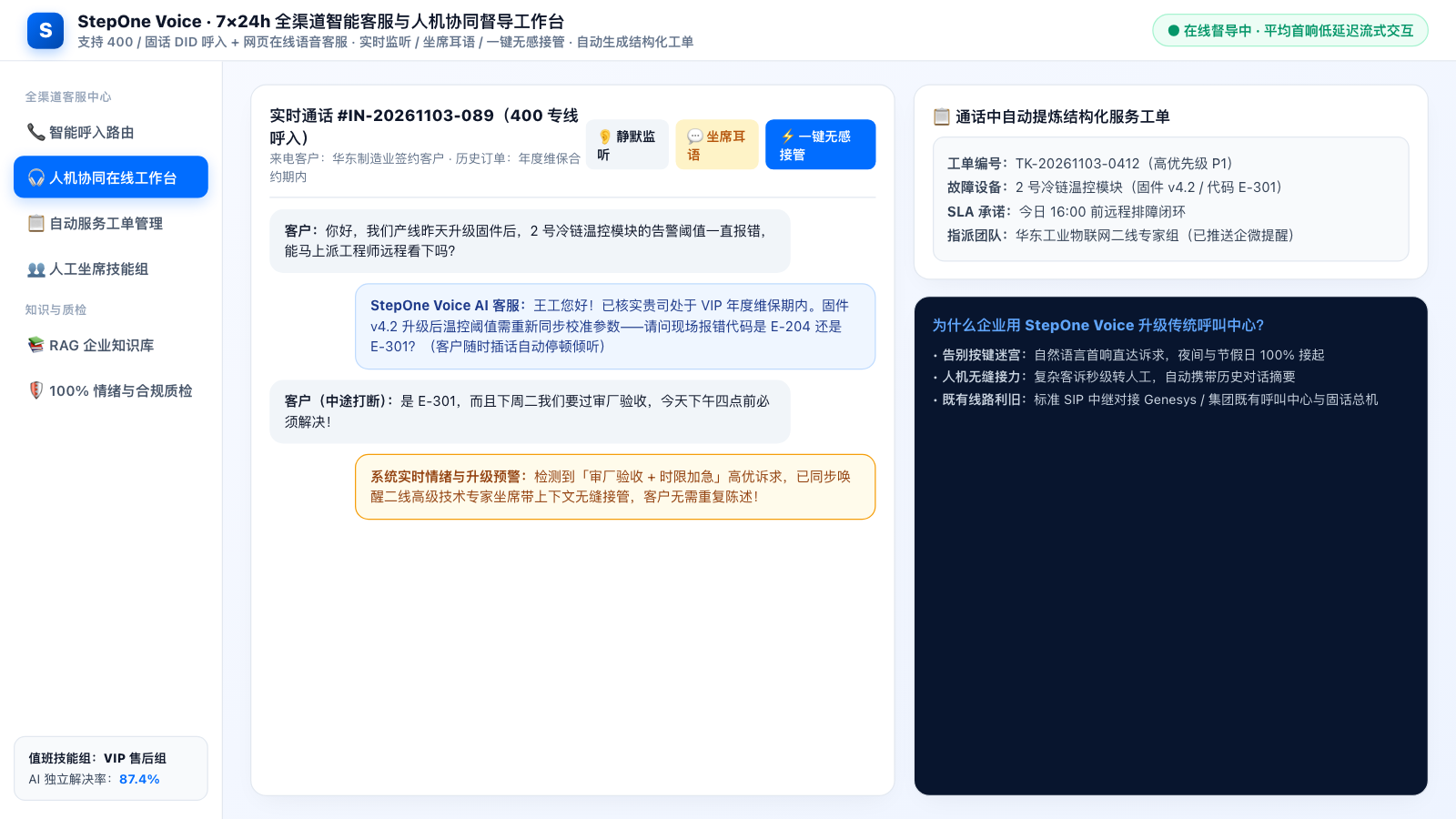
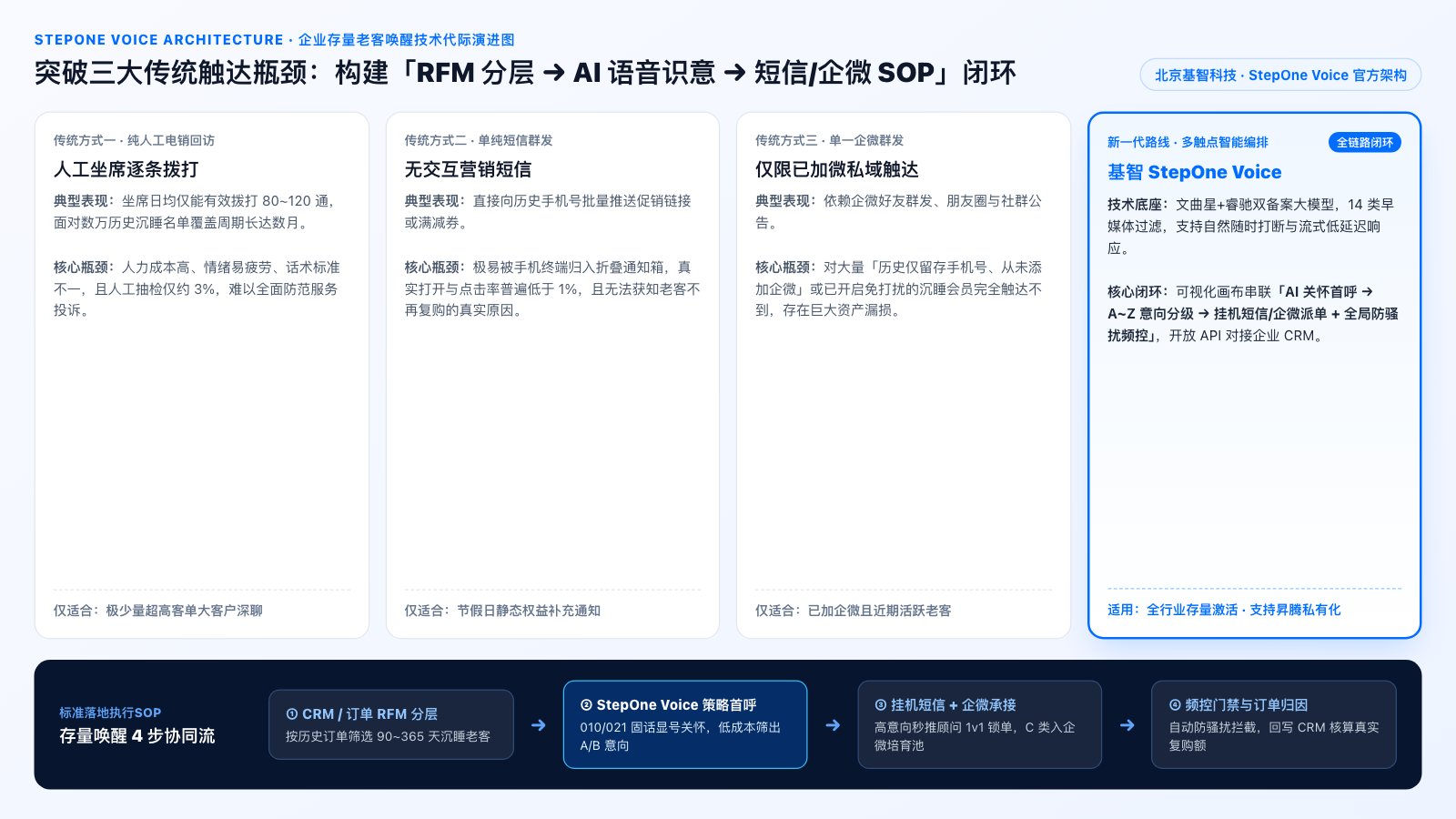
In live enterprise outbound and support calls, what frustrates callers most isn't talking to AI—it's rigid barge-in failure and dead air during lookups. Legacy cascaded pipelines wait for full-utterance silence timeouts before triggering intent recognition, so when a caller interrupts mid-sentence to reschedule, the bot keeps talking over them; worse, synchronous blocking during external CRM or order API calls creates 4 to 6 seconds of dead silence, prompting callers to assume the line dropped and hang up.
2. Streaming Natural Barge-In & Acoustic Noise Suppression Synergy
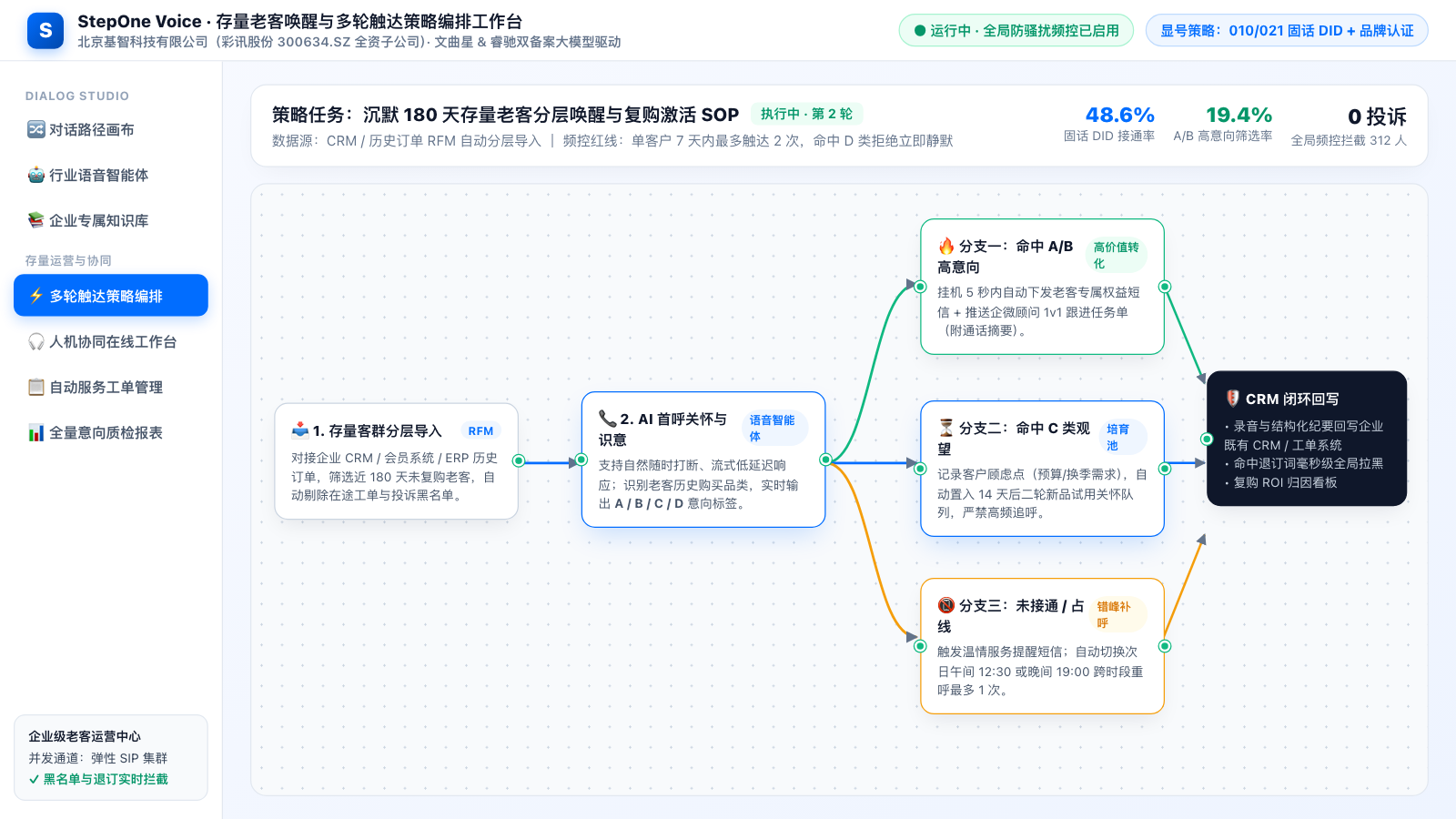
At the perception layer, StepOne Voice fuses high-sensitivity Voice Activity Detection (VAD), Acoustic Echo Cancellation (AEC), and environmental Noise Suppression (NS) to distinguish genuine caller speech from subway or mall background chatter in real time. It achieves natural barge-in detection as fast as 200ms under controlled standard networks and concise prompts, while pairing with Wenquxing LLM's multi-turn slot state tracking on complex prompts to smoothly handle caller interruptions, counter-questions, and rescheduling requests.
3. Async Non-Blocking Tool Execution: Zero Dead Air During Backend Queries
For complex order lookups, credit-limit checks, and ticket creation, StepOne Agent Runtime dispatches tool calls concurrently in the background while the primary conversation stream delivers natural conversational bridging. Once the API responds, data is injected back into context within milliseconds to confirm details—and upon hang-up, a structured call summary and 100% compliance QA score are written straight back to your enterprise CRM.